
Evaluating Principals with Student and Teacher Input
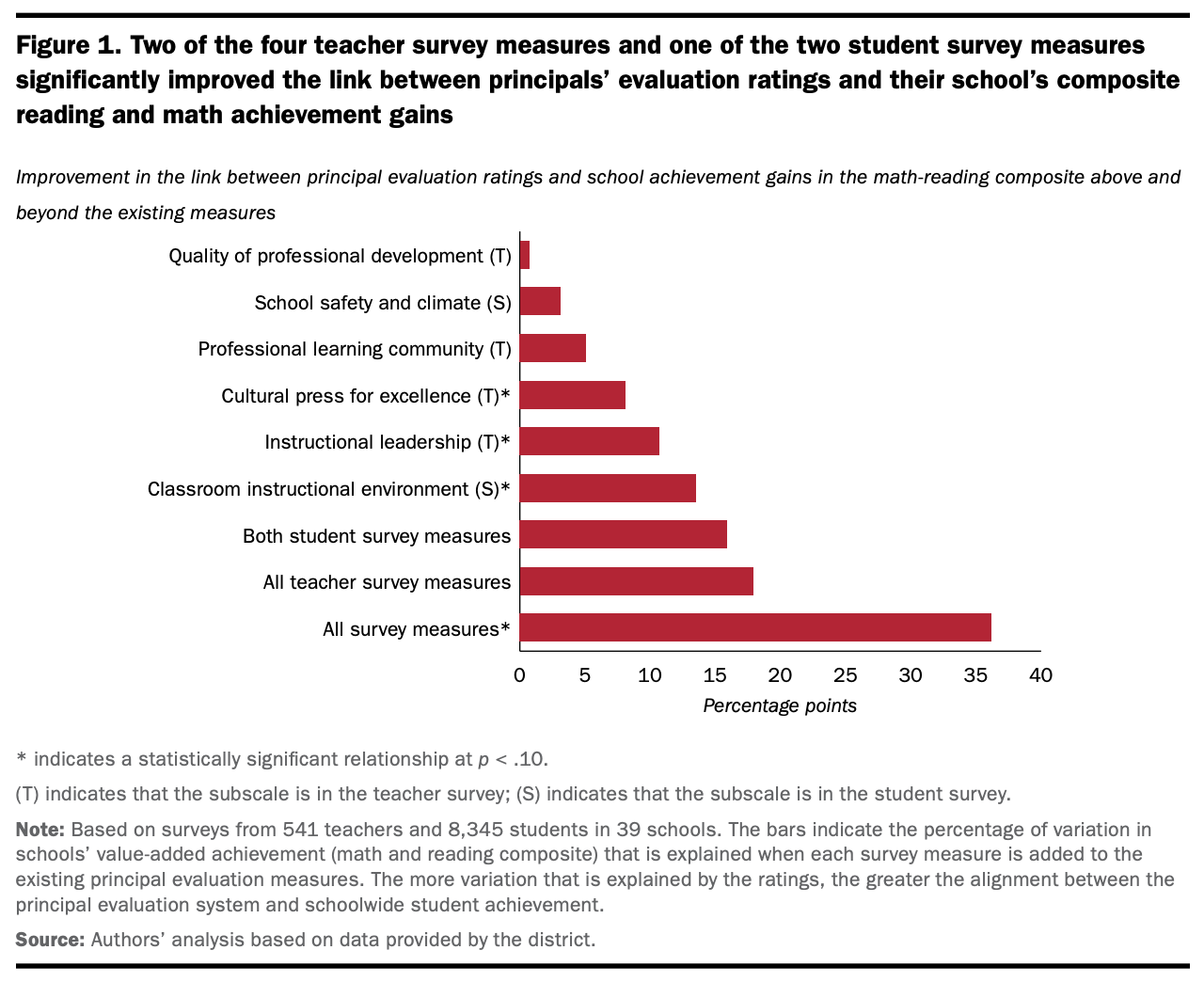
In collaboration with the American Institutes for Research (AIR) and the Regional Education Lab Midwest (REL), Basis conducted a rigorous study on how to best incorporate students’ and teachers’ voices in principal evaluation, and to what extent that predicted student achievement.
Why Learning Acceleration Matters
The Value of Student and Teacher Input
Evaluating a principal’s contributions to student achievement is difficult, especially without input from the students themselves and their teachers. When it comes to evaluating a leader, the most valuable insights come from the people being led. Yet, measuring input from teachers and students is difficult.
Good Principals, Good Schools.
Quality education starts with quality principals. Specifically, principal evaluations are largely predictive of school outcomes, apart from an unaccountable variation, a gap, between the two. With this in mind, Basis’ goal was to close that gap: creating principal evaluations that would better predict and understand student outcomes. For us, incorporating teacher and student feedback into evaluations was a no-brainer. Undeniably, our research indicated their feedback was the final, most essential piece in principal evaluations.
Statistics
Impact in Action
Student Feedback
The study incorporated data from 8,345 students grades 3-11.
Teacher Input
Across one academic school year, 541 teachers participated in the study.
Across Schools
The study reached 39 different schools across a single academic school year.
Input that Shapes Outcomes
The impact of incorporating teachers and students in principal evaluations is twofold: one, our findings show that their ratings strengthened the link between evaluations and student growth. Two, it offered invaluable insight into relationships and systems within schools, making teachers and students feel more heard. Incorporating feedback, evaluations undoubtedly better predicted school outcomes.