
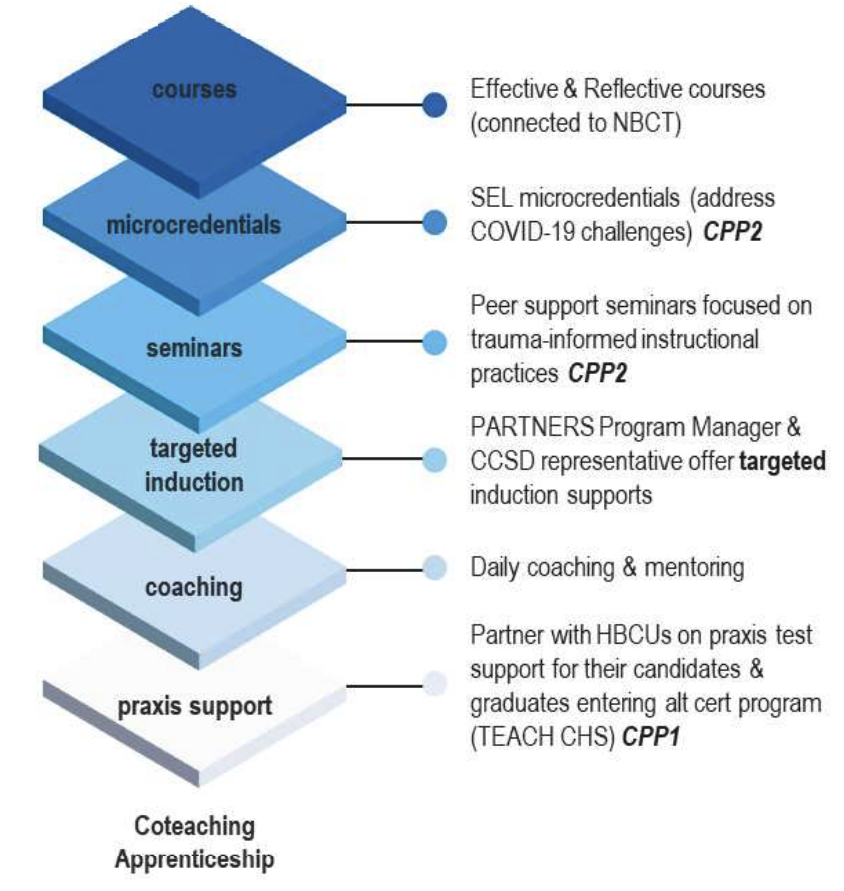
Co-Teaching Apprenticeship Models
By pairing novice teachers with mentors, the program turns a shared classroom into invaluable experience. As the work unfolds, we’re examining how this approach shapes teacher development, retention, and student outcomes.
Why our Evaluation Matters
School systems across the country are facing persistent challenges in recruiting, preparing, and retaining effective teachers, particularly in high-need schools. Traditional preparation models often separate coursework from practice, leaving new teachers underprepared for the realities of the classroom.
This project sits at the intersection of preparation and practice. In sharing a classroom, the PARTNERS model aims to accelerate learning, strengthen instructional quality, and reduce early-career attrition for novice and veteran teachers alike. At the same time, it raises important questions: what does effective apprenticeship look like at scale? How do we measure its impact not just on teachers, but on students?
As states and districts invest in grow-your-own and residency-based pathways, there is an urgent need for rigorous, practice-grounded evidence to inform decisions.
What's Next?
We are currently in the implementation and early analysis phase of this multi-year evaluation. Our work combines quantitative and qualitative approaches to understand both outcomes and experience, including:
- examining impacts on student achievement and attendance during and after the apprenticeship year.
- tracking teacher retention across experience levels over time.
- gathering real-time feedback from participants to understand how the model is experienced on the ground.
Transforming the Ability to Scale
Apprenticeship models are gaining momentum but lacking the ability to scale. They require alignment across preparation programs, districts, and policy systems, and depend heavily on the quality of co-teaching relationships and school-level conditions.
One of the central tensions we are exploring is how to preserve the depth and intentionality of apprenticeship while expanding access to more teachers and schools.
Early signals from the field suggest strong satisfaction among participants, but satisfaction alone is not enough. The real test is whether these models lead to sustained improvements in teaching practice, student learning, and long-term retention.
If apprenticeship is going to become a cornerstone of the educator workforce, the field will need more than promising models. It will need clear evidence about what works, for whom, and under what conditions. That is the work underway.